
 Indonesian
  Malay
Malay  Vietnamese
  Slovenian
  Slovak
  Latvian
  Bosnian
  Icelandic
  Ukrainian
  Georgian
  Serbian
  Croatian
  Belarusian
  Romanian
  Estonian
  Hungarian
  Czech
Czech  Catalan
  Norwegian
  Lithuanian
  Albanian
  Hindi
Hindi  Italian
  Finnish
  Arabic
  Danish
  Bulgarian
  Thai
Thai  Polish
  Swedish
  Greek
Greek  Portuguese
  Dutch
Dutch  Turkish
  Russian
  Deutsch
  French
  Korean
  Japanese
  English
 Products
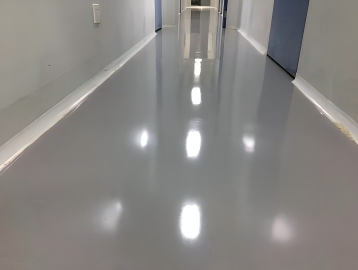
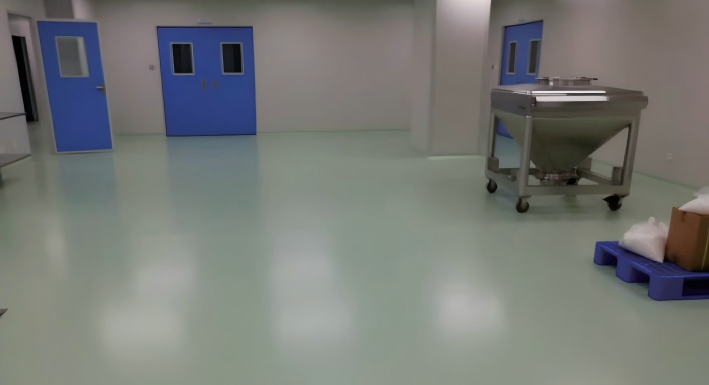
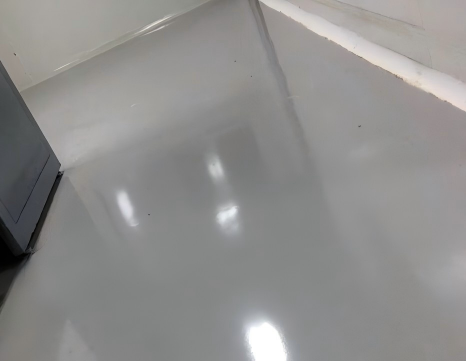
Solvent-free epoxy colored sand self-leveling system
Product Details
Product features
The surface is smooth and clean, with bright colors and excellent decorative effect.
It has stable curing, good leveling property, is easy to apply, has high mechanical strength and good wear resistance.
It does not suck up dust, does not generate dust, and is extremely easy to clean, making it the first choice for cigarette factory buildings.
Chemical resistance: It can resist salts such as sodium chloride, ferric chloride, copper sulfate, ammonia water, animal and vegetable oils, gasoline and other chemical media.
Scope of application
It is suitable for office floors with light to medium loads and industrial floors, such as those in cigarette factories, electronics factories, pharmaceutical factories and other industries, as well as high-end factories. It can also be used in commercial places and art clubs with higher requirements.
| Technical Indicators | |||
| Performance Category | Performance Parameter | Technical Index (GB/T22374-2018) | Test Result |
| Drying Time | Surface Dry, h | ≤ 8 | Compliant |
| Actual Dry, h | ≤ 48 | Compliant | |
| Hardness | Shore Hardness | Agreed | 83 |
| Abrasion Resistance | 750g/500r | ≤ 0.030 | 0.023 |
| Impact Resistance | Heavy Load | 1000g steel ball, 100cm height; no coating cracks or peeling | Compliant |
| Anti-slip Property | Dry Friction Coefficient | ≥ 0.50 | 0.61 |
| Water Resistance | 168h | No blistering, no peeling; slight discoloration allowed | Compliant |
| Chemical Resistance | Oil Resistance (120# Solvent Gasoline, 72h) | No blistering, no peeling; slight discoloration allowed | Compliant |
| Alkali Resistance (20% NaOH, 72h) | |||
| Acid Resistance (10% H₂SO₄, 48h) | |||
| Matching Instructions | |||||
| Coating Layer | Material Model | Packaging Specification | Mixing Ratio | Single Coat Usage (kg/m²) | Single Coat Thickness (mm) |
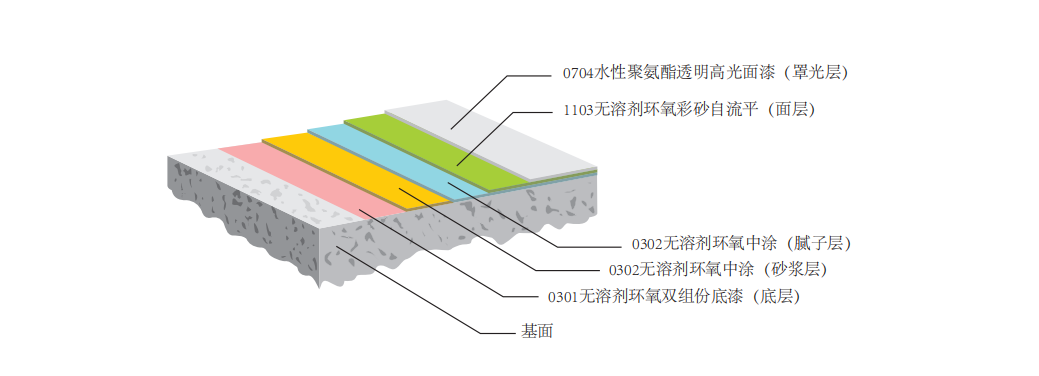
| Primer | WEDO-0301 Solvent-Free Epoxy Primer | 20KG/10KG | 2:01 | 0.15 (Knife Coating) | 0.15/0.3 |
| 0.3 (Roller Coating) | |||||
| Mortar Layer | WEDO-0302 Solvent-Free Epoxy Mid-Coat | 25KG/5KG | 5:01 | 0.3–0.5 | 0.5 |
| Putty Layer | WEDO-0302 Solvent-Free Epoxy Mid-Coat | 25KG/5KG | 5:01 | 0.1 | 0.1 |
| Topcoat Layer | WEDO-1103 Solvent-Free Epoxy Colored Sand Self-Leveling Coat | 26KG/4KG | 6.5:1 | 2.5–3 | 2.5 |
| Varnish Layer 1 | WEDO-0704 Waterborne Polyurethane Clear High-Gloss Varnish | 16KG/8KG/4KG | 4:02:01 | 0.1 | 0.06 |
| Varnish Layer 2 | WEDO-0704S Waterborne Polyurethane Clear Matte Varnish | 16KG/4KG/4KG | 4:01:01 | 0.1 | 0.06 |
Notes
Strictly control the air humidity to be less than 80%. When the humidity is too high, it is easy to cause problems such as loss of luster and floating color.
The flatness of the ground should be measured by a 2-meter straightedge to be no more than 3mm. If the flatness is too poor, problems such as flow, sand leakage and uneven color may occur.
When applying this product, no thinner should be added; otherwise, it may cause sand settling, patching, slow drying, and even the formation of bubbles.
After troweling, a defoaming roller must be used to defoam; otherwise, there will be local bubbles not being eliminated and uneven colored sand.
Due to the particularity of the colored sand self-leveling floor paint, the product color must be selected from our company's colored sand color card.
There are certain color differences among different batches of materials. When constructing in the same area, the same batch of materials should be used. When placing multiple orders for the same project, it must be noted that the color will be adjusted according to the sample
Technical Statement
Our company can design construction plans of different specifications (thickness, effect, etc.) through flexible matching and combination of various products to meet the personalized requirements of all kinds of customers. To ensure that your project can select the appropriate floor system, please consult our professional technical advisors. However, when using our company's products, please strictly follow the construction process, dosage requirements and precautions of the product. Otherwise, our company will not bear any responsibility for the quality of the project or any losses.
| Construction Process | ||
| Process Name | Specific Methods and Requirements | Single Coat Usage (kg/m²) |
| Substrate Treatment | 1. Substrate strength: Not less than C20 2. Substrate flatness: ≤3mm (measured with a 2m ruler) 3. Substrate dryness: Moisture content of substrate surface < 8% 4. Repair hollowing and cracks on the ground in advance 5. Fully grind the concrete substrate | / |
| Primer Layer | 1. Use WEDO-0301: Mix base paint and curing agent in proportion until uniform 2. Apply evenly with a roller 3. Use a wool brush for edges (door sides, wall corners, machine corners) | 0.15 (Knife Coating) |
| 0.3 (Roller Coating) | ||
| Mid-Coat Mortar Layer | 1. Use WEDO-0302: Mix base paint and curing agent in proportion until uniform, then add quartz sand (usually 80-120 mesh) at the recommended ratio: Paint:Quartz sand = 1: 0.2-1, stir evenly 2. Scrape fully with a trowel; adjust the number of coats as needed 3. Grind and dust off after curing | 0.3–0.5 |
| Putty Layer | 1. Use WEDO-0302: Mix base paint and curing agent in proportion until uniform, then add appropriate fillers (quartz powder, talc powder, etc.) at the ratio: Paint:Filler = 1: 0.1-0.5, stir evenly 2. Scrape evenly with a trowel, focus on repairing defects like pinholes and air pits; adjust the number of coats as needed 3. Fully grind and dust off after curing | 0.1 |
| Topcoat Layer | 1. Use WEDO-1103: Mix Component A and Component B in proportion until uniform, then apply evenly with a trowel (ensure no missing areas) 2. Treat with a bubble-removing roller after application | 2.5–3 |
| Varnish Layer (Optional) | After the topcoat layer is dry, select different varnishes to adjust the surface gloss and improve surface scratch resistance | 0.1 |
Construction section
Construction conditions
Air temperature: 5℃ - 30℃
Relative humidity < 80%
The moisture content of the substrate surface is less than 8%
The construction site should have good ventilation
Dew point temperature: The substrate and the substrate of the uncured coating must be at least 3℃ higher than the dew point temperature to reduce the risk of condensation or mottling of the ground coating. Oily floors must be thoroughly cleaned up; otherwise, it may affect the even application of the coating.